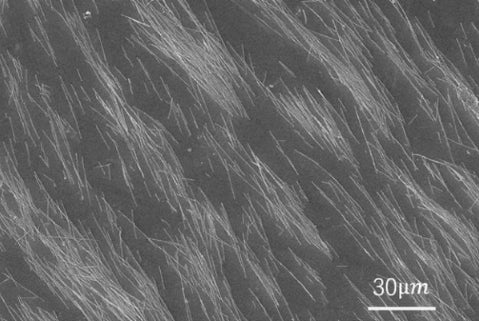
In organic experiments, rotors, columns, and plates are essential tools — but when it comes to microscopic liquid mixing, traditional rotors fall short. The innovative magnetic nanostirr, developed by Professor Chen Hongyu’s research team at Westlake University, solves this challenge by enabling efficient stirring in confined spaces like microdroplets and...
10
Dec

In recent years, transition metal catalysts coordinated by nitrogen heterocyclic carbene (NHC) have become a research hotspot for various cross-coupling reactions. Among them, Pd, Cu, Ag, Au and other metals are the main ones. They have high stability and can be used in various processes. Suzuki, Heck, Sonogashira and other...
10
Dec
Organometallic chemistry plays a crucial role in the development of modern chemical synthesis, focusing on the synthesis, structure, reactions, properties, and applications of metal-organic compounds. These compounds, consisting of a central metal atom and surrounding ligands, are widely used as catalysts in organic synthesis, particularly in transition metal-catalyzed reactions. Professor...
06
Dec

Hantzsch monomer is one of the multi-component functional monomers and is mainly used to prepare fluorescent polymers (which can identify cells, sugars, curcumin, etc.) and self-healing hydrogels.Bailingwei exclusively provides the scientific research results of Associate Professor Tao Lei - new Hantzsch polymer material monomers. The product advantages are as follows:Outstanding...
06
Dec
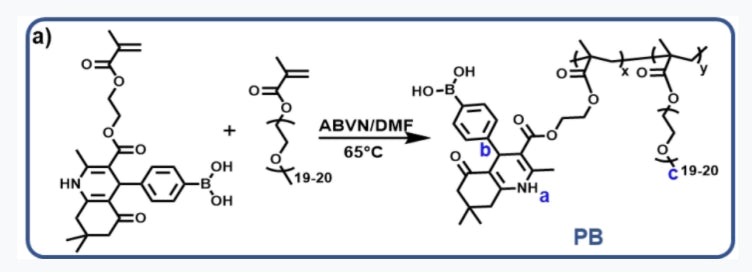
Hantzsch monomer is a multi-component functional monomer that can be used to prepare fluorescent polymers (which can recognize cells, sugars, curcumin, etc.) and self-healing hydrogels. Associate Professor Tao Lei of Tsinghua University successfully synthesized a new type of Hantzsch monomer and used it to visualize cell anticoagulant polymers and curcumin...
28
Nov

Asymmetric catalysis is one of the research hotspots in the field of organic synthesis. According to the type of catalyst, it can be divided into metal complex catalysis, organic small molecule catalysis and enzyme catalysis. Chiral ligands are crucial for metal complex catalysts, but most ligands have...