Base-modified nucleoside analogs have been widely studied in the research and development of antiviral and antitumor drugs, among which the most representative is pseudouridine. Pseudouridine is the most abundant modified nucleoside in RNA and is also known as the "fifth nucleoside" of RNA. A large number of studies have shown that introducing pseudouridine or N1-methylpseudouridine into mRNA may effectively reduce the immunogenicity of mRNA vaccines and enhance the stability and protein expression capacity of mRNA.
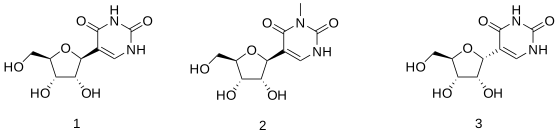
The synthesis of pseudouridine is mainly divided into two types. One is the enzymatic catalysis method, in which pseudouridine appears as a byproduct due to the selectivity of the catalytic enzyme, resulting in low conversion and difficult purification and separation, making it unsuitable for large-scale production. The other is chemical synthesis. Organic chemists have been continuously exploring simple and efficient methods for synthesizing pseudouridine, and the synthetic yields have gradually improved. This article summarizes four chemical synthetic routes for pseudouridine.
Synthetic Route 1
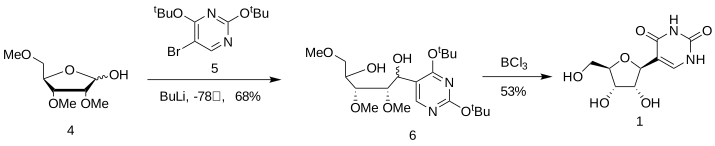
Brown et al. used compound 4 and 5-bromo-2,4-di-(tert-butoxy)pyrimidine to synthesize through a two-step process, followed by BCl3-mediated cyclization of the diol mixture.
Synthetic Route 2
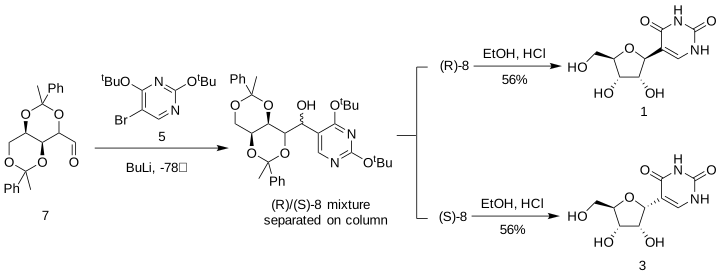
Lerch et al. used compound 7 and 5-bromo-2,4-di-(tert-butoxy)pyrimidine to synthesize through a two-step process, followed by cyclization of the purified alcohol under acidic conditions.
Synthetic Route 3
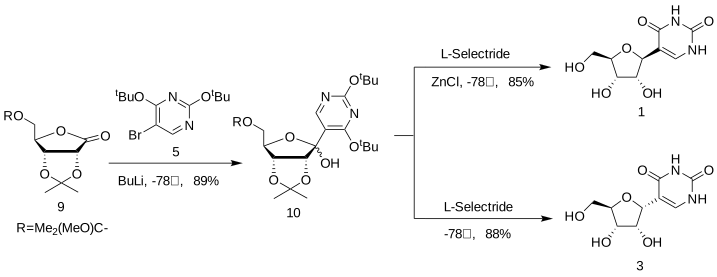
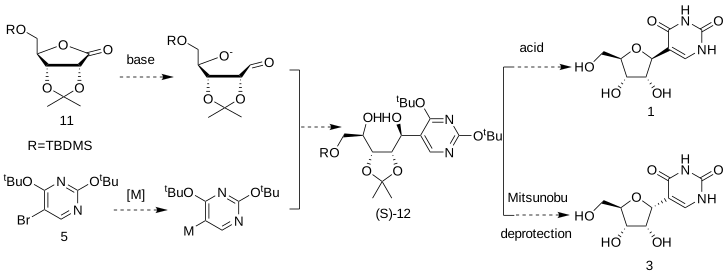
Hanessian et al. used compound 9 and 5-bromo-2,4-di-(tert-butoxy)pyrimidine, and through a five-step stereoselective synthesis obtained the diol compound, followed by Mitsunobu cyclization.


 艳 李
艳 李