Product Name
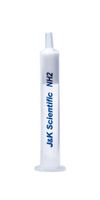
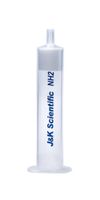
Carb-GCB/NH2 SPE Cartridges, bed wt. 500 mg/500 mg, volume 6 ml, 30 pcs/pack
Brand Name
J&K Scientific
Product Number
2471251

J&K Scientific’s Carb-GCB/NH2 sorbent combines the merits of both Carb-GCB and NH2 sorbents. It can remove interfering compositions such as pigments, sterols and fatty acids in food samples, which makes it an effective packing for cleaning samples in multiresidue pesticide analysis.
Applications include:
Specifications for Carb-GCB:
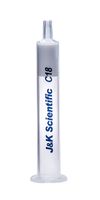 |
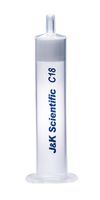 |
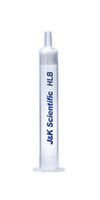 |
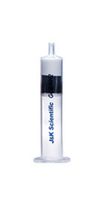 |
 |
 |
 |
 |
|
|
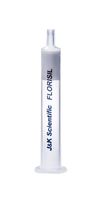
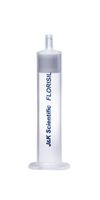
| Packing Material | C18 | C18 | HLB | Carb-GCB/NH2 | NH2 | NH2 | Florisil | Florisil | C18 |
| Bed Weight | 500mg | 500mg | 60mg | 500mg | 500mg | 500mg | 500mg | 500mg | 200mg |
| Tube Volume | 3ml | 6ml | 3ml | 6ml | 3ml | 6ml | 3ml | 6ml | 3ml |
| Packaging | 50 pcs/pack | 30 pcs/pack | 50 pcs/pack | 30 pcs/pack | 50 pcs/pack | 30 pcs/pack | 50 pcs/pack | 30 pcs/pack | 50 pcs/pack |
What Are SPE Columns? - J&K Scientific LLC
SPE Method Development Guide - J&K Scientific LLC
How to Select the Right SPE Column for Your Lab - J&K Scientific LLC
Solid Phase Extraction (SPE) Columns in Environmental Analysis - J&K Scientific LLC
Solid Phase Extraction (SPE) Columns in Pharmaceutical Analysis - J&K Scientific LLC
Solid Phase Extraction (SPE) Columns in Biological Sample Preparation - J&K Scientific LLC
Solid Phase Extraction (SPE) Columns in General Laboratory Sample Cleanup - J&K Scientific LLC
Solid Phase Extraction (SPE) Columns in Food Safety and Agricultural Analysis - J&K Scientific LLC
SPE vs QuEChERS: Which Sample Preparation Method Is Right for Your Analysis? - J&K Scientific LLC
1. What is an SPE column and what is its main purpose?
An SPE (Solid Phase Extraction) column is a sample preparation tool used for purification and enrichment. It contains a specific sorbent (e.g., silica-based bonded phases, polymers, or ion-exchange materials). Its purpose is to concentrate target analytes from complex matrices (such as blood, urine, water samples, food extracts) while removing interfering impurities, thereby improving the sensitivity and accuracy of subsequent chromatographic or mass spectrometric analysis.
2. How do I select the right type of SPE column?
Selection depends on the properties of the target compound and the sample matrix:
Reversed-phase (e.g., C18, C8) : Suitable for non-polar to moderately polar compounds, retained from aqueous solutions.
Normal-phase (e.g., silica, NH2) : Suitable for polar compounds, retained from organic solutions.
Ion exchange (SCX, SAX) : Suitable for ionizable basic or acidic compounds.
Mixed-mode : Offers both reversed-phase and ion-exchange interactions, ideal for complex biological samples.
→ Suggestion: First perform small-scale tests (e.g., using 96-well SPE plates) to screen for retention and elution conditions.
3. What is the standard operating procedure for an SPE column?
Typical four-step process:
Conditioning: Wet the sorbent surface using an organic solvent (e.g., methanol).
Equilibration: Replace the conditioning solvent with the loading solvent (usually low organic content or a buffer).
Loading: Pass the sample through the column at a slow flow rate (1–2 mL/min).
Elution: Collect the target analytes using an appropriate elution solvent (e.g., high organic content or pH-adjusted solution).
Note: Some methods include an intermediate wash step to remove weakly retained interferences without eluting the targets.
4. How does the sample solvent affect recovery during loading?
The effect is significant. The loading solvent should be weaker than the elution solvent (e.g., high aqueous content for reversed-phase mode). If the sample contains a high proportion of organic solvent (e.g., >10% methanol), the target analytes may break through without being retained. It is recommended to dilute the sample with buffer or evaporate the organic solvent under reduced pressure before loading.
5. Why does an SPE column show slow flow or blockage?
Common causes and solutions:
Particulate blockage: Centrifuge or filter (0.45 µm membrane) the sample before loading.
Sorbent fine particle aggregation: Avoid vigorous vacuum application; use gravity or positive pressure to control flow rate.
Protein precipitation in biological matrices: Precipitate proteins with acetonitrile, centrifuge, and use the supernatant.
For viscous samples (e.g., serum), use columns with larger particle size sorbents (e.g., 50 µm instead of 30 µm).
6. How can I solve the problem of low recovery?
Systematic troubleshooting:
No retention: Check whether the column type and sample solvent strength are compatible; add an equilibration step after conditioning.
Incomplete elution: Increase elution solvent strength (e.g., higher organic content or larger volume for reversed-phase); or change the elution solvent pH to deionize the target analytes.
Degradation/strong adsorption: For compounds unstable at extreme pH, add stabilizers (e.g., 0.1% ascorbic acid) to the elution solvent.
7. Can SPE columns be reused?
Not recommended. Sorbents typically irreversibly adsorb strongly retained impurities. Reuse can lead to cross-contamination, variable recovery, and reduced column performance. Unless in a well-validated, dedicated method (e.g., processing the same clean matrix repeatedly), SPE columns should be used only once.
8. How is the sorbent capacity of a column calculated?
Generally follow the 5% rule: the total mass of target analytes loaded should not exceed 5% of the sorbent mass. For example, for a 500 mg column, the total target amount should be ≤ 25 mg. Actual capacity must be determined experimentally by performing breakthrough tests (loading increasing amounts until breakthrough occurs).
9. What are some general strategies when facing difficulties in method development?
Start with a simple reversed-phase (C18) column and adjust the methanol/water ratio for elution.
If peak tailing or recovery is pH-sensitive, consider ion-exchange or mixed-mode phases.
Use statistical design (e.g., factorial experiments) to quickly optimize conditioning, washing, and elution volumes.
Consult application databases (e.g., from Waters, Agilent, Supelco) — many mature methods already exist.
10. How does SPE compare to protein precipitation (PPT) and liquid-liquid extraction (LLE)?
SPE: Provides cleaner extracts, can be automated, but has higher cost and requires more method development.
PPT: Fast and inexpensive, but offers limited purification and may retain proteins and lipids.
LLE: Suitable for non-polar compounds, but can suffer from emulsion formation and high solvent consumption.
→ Recommendation: SPE is preferred for bioanalysis; PPT for rapid routine screening; LLE for extremely hydrophobic analytes.