Available on backorder. Please allow 2-3 weeks for production.
Sku SC96-4700_1_KIT
US-Strem
Product Information
Product Name
RAFT Agent Kit for controlling polymerizations at the molecular level
Brand Name
US-Strem
Product Number
96-4700
Certificate of Analysis (COA)
COA not found
Safety Information
Storage Condition
Store at 2-8℃
Application
This kit contains the following products:
Name
Cas No.
Cat No.
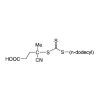
4-Cyano-4-(dodecylsulfanylthiocarbonyl)sulfanylpentanoic acid, min. 97%
870196-80-8
16-0415
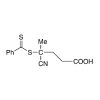
4-Cyano-4-(thiobenzoylthio)pentanoic acid, min. 97%
201611-92-9
16-0422
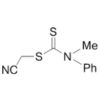
2-Cyanomethyl-N-methyl-N-phenyldithiocarbamate, min. 97%
76926-16-4
16-0423
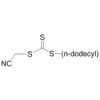
2-Cyanomethyl-S-dodecyltrithiocarbonate, min. 97%
796045-97-1
16-0425
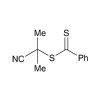
2-Cyanoprop-2-yl-dithiobenzoate, min. 97%
201611-85-0
16-0430
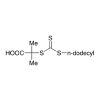
2-Methyl-2-[(dodecylsulfanylthiocarbonyl)sulfanyl]propanoic acid, min. 97%, DDMAT
461642-78-4
16-0460
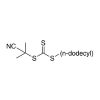
2-(2-Cyanoprop-2-yl)-S-dodecyltrithiocarbonate, min. 97%
870196-83-1
16-0610
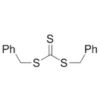
S,S-Dibenzyltrithiocarbonate, min. 97%, DBTTC
26504-29-0
16-0617
RAFT Technology
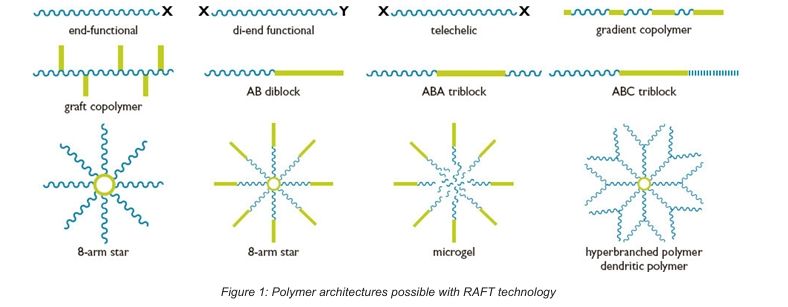
CSIRO and DuPont have developed an innovative technology known as RAFT (for Reversible Addition-Fragmentation chain Transfer), which allows for the synthesis of specially designed polymeric materials with enhanced properties. CSIRO has licensed this technology to Strem to make available to you for research purposes. RAFT technology is a sophisticated form of controlled free radical polymerization. Often known as ‘living polymerization’ (it can be stopped and restarted at anytime) this technology enables the synthesis of tailored polymers with unprecedented control over composition and architecture. Polymers may be synthesized more readily, using RAFT technology, • With predetermined molecular weight and narrow molecular weight distributions over a wide range of monomers and reaction conditions, • With reactive terminal groups that can be purposely manipulated, including further polymerization, • With complex architecture, including A B diblock, A B A triblock, graft, star; gradient and branched polymers (see Figure 1), • That are based on scaleable manufacturing processes utilizing conventional processing equipment. RAFT technology can be used with a wide range of monomers and monomer mixtures, and can be used in all modes of free radical polymerization, including solution, emulsion and suspension polymerizations. This allows for an unlimited array of tailored compositions and complex architectures under standard conditions.
The RAFT process
Implementing the RAFT process can be as simple as introducing a suitable chain transfer agent, known as a RAFT Agent (see Figure 2), into conventional free radical polymerization, while employing conventional plant and equipment. The RAFT Agents allow for the preparation of polymers with low polydispersity, well-defined microstructure and predetermined molecular weight.
As the newly formed polymer is terminated by an active RAFT group, thereby rendering it a RAFT Agent in its own right, it is capable of undergoing further polymerization reactions or can be subjected to other chemical manipulations (see Figure 3). Incorporation of the RAFT Agent in the final polymer obviates the need for its removal, thereby simplifying the isolation and purification of the final polymer product. The RAFT process is a user and, environmentally friendly process that does not require expensive and contaminating additives unlike other controlled free radical polymerization processes (eg. ATRP).
The RAFT process is typically started by a separate, commercially available, free radical initiator. The RAFT Agent is rapidly incorporated into the growing polymer and facilitates further growth of the polymer by incorporating monomer, one unit at a time. Incorporation of the RAFT Agent into the final polymer results in a cleaner and more versatile product. Overall, RAFT polymerization results in: polymers with controlled molecular weight
narrow distribution of molecular weight, i.e. low polydispersity
ability to incorporate, in a defined sequence, one or more type of monomers in the polymer chain
RAFT group retained in the final polymer
opportunity for further chemical manipulation of the RAFT group, including further polymerization or removal
Further detailed information on RAFT technology may be found in the following references: ◦ Living Free-Radical Polymerization by Reversible Addition-Fragmentation Chain Transfer:The RAFT Process, J. Chiefari, et al, Macromolecules, 1998,31,5559-5562. ◦ Living Radical Polymerization by the RAFT Process. G. Moad, E. Rizzardo, S. H.Thang, Aust. J. Chem. 2005,58, 379-410. ◦ Living Radical Polymerization by the RAFT Process -A First Update, G. Moad, E. Rizzardo, S. H.Thang, Aust. J. Chem. 2006,59, 669-692. ◦ Radical addition-fragmentation chemistry in polymer synthesis, G. Moad, E. Rizzardo, S H. Thang, Polymer 49 (2008), 1079-1131.
RAFT Agent Kit for controlling polymerizations at the molecular level
Product Information
Product Name
N-(9H-Fluoren-9-ylmethoxy)carbonyl-3-methoxy-L-phenylalanine
Brand Name
ChemScene
Product Number
CS-0040949
CAS
206060-40-4
Certificate of Analysis (COA)
Search
COA not found
Product Information
Product Name
2-Ethynyl-1,3,5-trimethylbenzene, 97%
Brand Name
J&K
Product Number
259815
CAS
769-26-6
Certificate of Analysis (COA)
Search
COA not found
Product Information
Product Name
Tris-acetic acid electrophoresis buffer (50×TAE)
Brand Name
J&K
Product Number
9456123
Certificate of Analysis (COA)
Search
COA not found
Product Information
Product Name
S(R)-N-(1S)-1-2-(Diadamantanphosphino)phenylethyl-N,2-dimethyl-2-propanesulfinamide, 95%
Brand Name
J&K
Product Number
9426196
Certificate of Analysis (COA)
Search
COA not found
Product Information
Product Name
Mycophenolate Mofetil EP Impurity H
Brand Name
US-CATO
Product Number
C4X-151528
CAS
79081-87-1
Certificate of Analysis (COA)
Search
COA not found
Product Information Product Name 3-(4-Bromo-2-fluoro-3-methoxyphenyl)-3-oxo-propionic acid ethyl ester Brand Name Chem Impex Product Number 18828 CAS 194804-99-4 Certificate of Analysis (COA) Search COA not found Application 3-(4-Bromo-2-fluoro-3-methoxyphenyl)-3-oxo-propionic acid ethyl ester...
Product Information
Product Name
Isochroman-1-carboxylic acid
Brand Name
ChemScene
Product Number
CS-0075082
CAS
13328-85-3
Certificate of Analysis (COA)
Search
COA not found
Product Information
Product Name
Mycophenolate Mofetil
Brand Name
US-CATO
Product Number
C4X-15155
CAS
128794-94-5
Certificate of Analysis (COA)
Search
COA not found




![N-[(9H-Fluoren-9-ylmethoxy)carbonyl]-3-methoxy-L-phenylalanine|CS-0040949|206060-40-4](http://www.jk-sci.com/cdn/shop/files/519506_200x200_crop_center.png?v=1776440652)


![[S(R)]-N-[(1S)-1-[2-(Diadamantanphosphino)phenyl]ethyl]-N,2-dimethyl-2-propanesulfinamide, 95%|9426196](http://www.jk-sci.com/cdn/shop/files/GeneralChemical_optimized_1aa2a2a5-03e8-4e56-a313-1ee0558de41d_200x200_crop_center.png?v=1776306515)