In three distinct steps, the Robinson annulation converts a ketone and an α,β-unsaturated ketone into a substituted cyclohexenone compound. First, the base creates an enolate ion intermediate, which reacts with the α,β-unsaturated ketone in a conjugate 1,4 addition (Michael reaction) to form a 1,5 diketone. An intramolecular aldol reaction occurs next, affording a cyclic β-hydroxy ketone. A final base-catalyzed dehydration affords the cyclohexenone product.
- Reagents: Strong Protic Acid (H2SO4, HClO4, HCO2H, etc.), H2O or Solvent (Acetic Acid, H2SO4 (conc.), CHCl3, etc.)
- Reactant: Aliphatic or Aromatic Nitrile, Carbocation Precursor (Alkene, Alkyl Halide, 2°, 3° or Benzylic Alcohol)
- Product: N-Substituted Amides
- Type of Reaction: Addition
- Bond Formation: N-C, N-H, C-C, C=O
Lab Tips
- The alcohol or alkene is usually added to the nitrile substrate (classically dissolved in a mixture of acetic acid and concentrated sulfuric acid) at slightly elevated temperatures (50 – 100°C).
- Lewis Acids such as SnCl4, AlCl3, etc. can also be employed to generate the required carbocation.
- Besides aliphatic and aromatic nitriles, cyanogen and cyanamide are also substrates.
- The initial carbocation may undergo a Wagner-Meerwein rearrangement to generate the most stable carbocation before reacting with the nitrile.
- 1,1-disubstituted alkenes give rise to regioisomerically pure products, while 1,2-disubstituted alkenes may form a mixture of regioisomers.
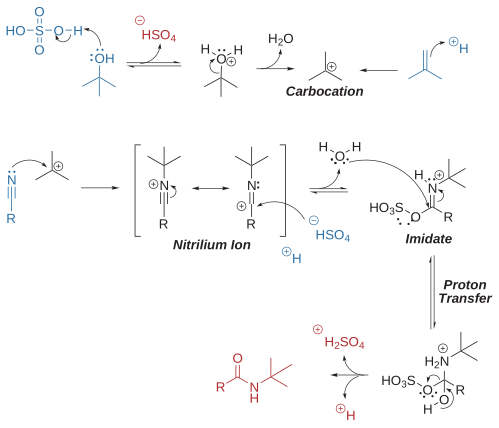
Mechanism
Top Citations
Original Paper
Related Reactions
- Synthesis of Amides
- Synthesis of Protected Primary Amines
Related Compounds
- Nitrile
- Strong Acid