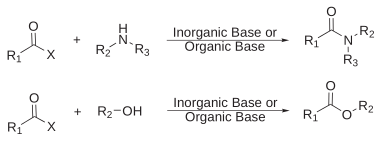
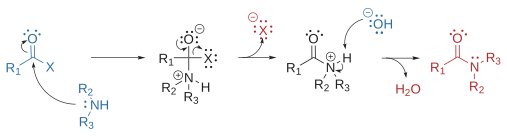
The synthesis of amides from amines and esters from alcohols with acyl halides or anhydrides in the presence of a base is known as the Schotten-Baumann reaction. The amine attacks the acyl halide, forming a tetrahedral intermediate that releases a halide ion. Deprotonation of the positively charged nitrogen affords the amide product. Esters are formed from alcohols in a similar fashion.
- Reagents: Original Conditions: Inorganic Base (NaOH, KOH, Na2CO3, NaHCO3), Water or Modified Conditions: Aprotic Solvent, Organic Base (Pyridine, DMAP, Et3N, etc.) and/or Lewis Acid (MgBr2, Sc(OTf)3, etc.)
- Reactant: Acyl Halide or Anhydride, 1° or 2° Amine, 1°, 2° or 3° Alcohol
- Product: Amide or Ester
- Type of Reaction: Nucleophilic Acyl Substitution
Mechanism
Top Citations
Related Compounds
- Base
- Lewis acid
- Acyl hailde
- Acid anhydride
- Alcohol
Notice for Bulk/Industrial Orders
To ensure you receive the most accurate pricing and terms for your specific needs, all purchases require a custom quote.
Please contact our sales team to discuss your requirements and receive a formal quotation.
We appreciate your interest and look forward to supporting your large-scale projects.