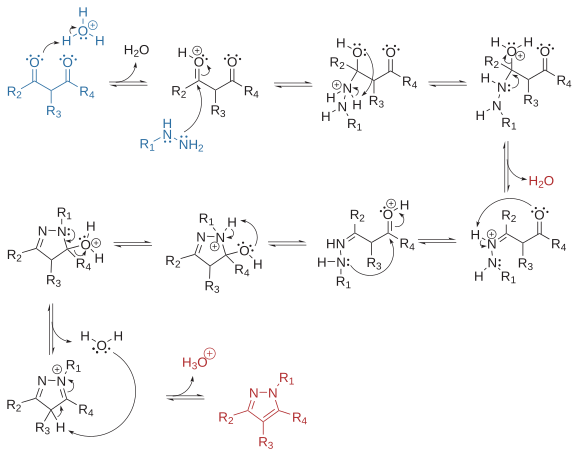
The Knorr pyrazole synthesis uses a catalytic acid to convert a hydrazine and 1,3-dicarbonyl compound to pyrazoles.

The dicarbonyl deprotonates the acid and is subsequently attacked by the hydrazine to produce an imine. The second nitrogen of the hydrazine then attacks the second carbonyl group to form a second imine. The diamine then is deprotonated to recreate the catalyst, resulting in the final pyrazole products. There can be two different pyrazole formations depending on which carbonyl group of the dicarbonyl is attacked first.
- Reagents: Catalytic Acid
- Reactant: Hydrazine, 1,3-Dicarbonyl Compound
- Product: Pyrazole
Mechanism