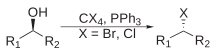
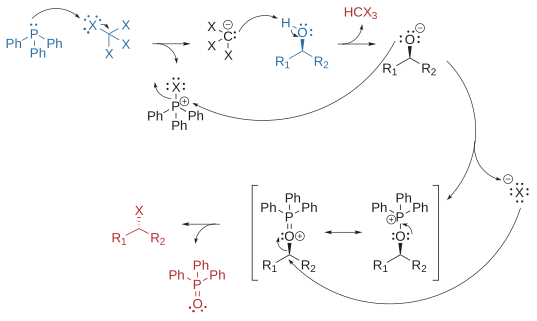
The Appel reaction uses a carbon tetrahalomethane and triphenylphosphine to convert a primary or secondary alcohol to an alkyl halide. First triphenylphosphine forms a phosphonium ion by abstracting a halogen from carbon tetrahalomethane. The alcohol then attacks the phosphonium ion, generating an oxyphosphonium intermediate. An SN2 displacement by the halide ion produces triphenylphosphine oxide and the alkyl halide. Inversion of configuration occurs if the carbon is asymmetric.
- Reagents: Triphenyl Phosphine, Tetrahalomethane
- Reactant: Primary or Secondary Alcohol
- Product: Alkyl Halide
- Type of Reaction: SN2
Mechanism
Top Citations
Original Paper
Related Reactions
- Synthesis of Alkyl Bromides
- Synthesis of Alkyl Chlorides
Related Products
- Carbon Tetrachloride (CAS 56-23-5)
- Carbon Tetrabromide (CAS 558-13-4)
- Carbon Tetraiodide (CAS 507-25-5)
- Methyl Iodide (CAS 74-88-4)
- Iodine (CAS 7553-56-2)