
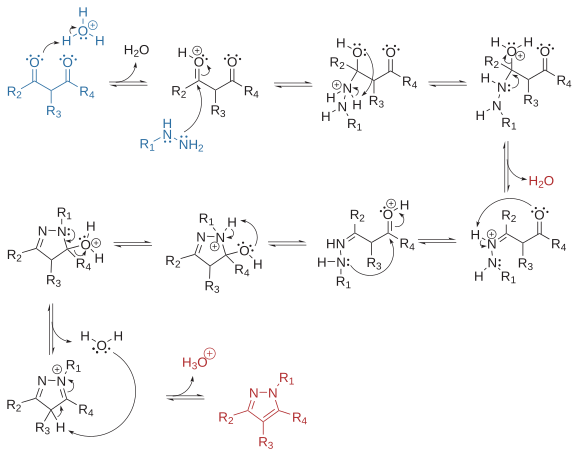
The Knorr pyrazole synthesis uses a catalytic acid to convert a hydrazine and 1,3-dicarbonyl compound to pyrazoles.

The dicarbonyl deprotonates the acid and is subsequently attacked by the hydrazine to produce an imine. The second nitrogen of the hydrazine then attacks the second carbonyl group to form a second imine. The diamine then is deprotonated to recreate the catalyst, resulting in the final pyrazole products. There can be two different pyrazole formations depending on which carbonyl group of the dicarbonyl is attacked first.
- Reagents: Catalytic Acid
- Reactant: Hydrazine, 1,3-Dicarbonyl Compound
- Product: Pyrazole
Mechanism
Top Citations
Original Paper
Related Products
- Catalytic Acid
- Hydrazine (CAS 302-01-2)
- Pyrazole (CAS 288-13-1)
Need Bulk Quantities? Let’s Talk Strategy
To ensure you get the most competitive rates and reliable lead times for your specific scale, we offer customized pricing for industrial orders.
Contact our technical sales team today for a fast, formal quotation tailored to your project requirements.
