
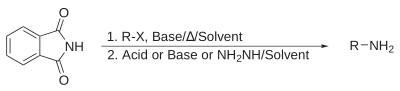
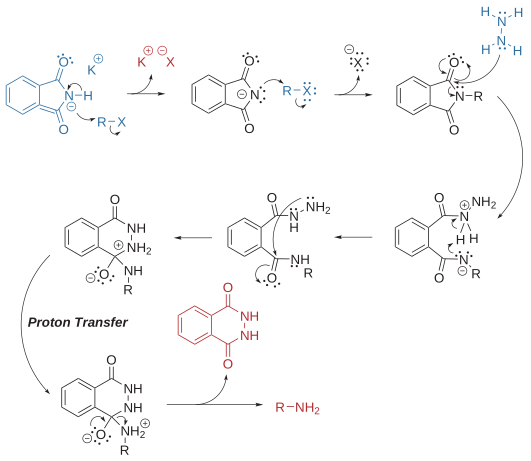
The Gabriel synthesis uses phthalimide, a base, an alkyl halide, and hydrazine to make a 1° amine in a two-step process. First phthalimide is alkylated with an alkyl halide via an SN2 reaction, forming N-alkylphthalimide. Next, hydrazine attacks a carbonyl group of N-alkylphthalimide, resulting in the ring opening, followed by a proton transfer, and intramolecular attack of the other carbonyl by hydrazine’s terminal nitrogen to form a tetrahedral intermediate. A final proton transfer and breakdown of the tetrahedral intermediate gives the desired 1° amine and a cyclic phthalhydrazide by-product.
- Reagents: Acid, Base or Hydrazine/Solvent (e.g. MeOH)
- Reactant: Alkyl Halide, Phthalimide or Potassium Phthalimide
- Product: 1° Amine
- Type of Reaction: SN2, Nucleophilic Addition of Hydrazine
Mechanism
Top Citations
Original Paper
Related Reactions
- Delépine Reaction
- Eschweiler-Clarke Reaction
- Staudinger Reaction
- Synthesis of Primary Amines
Related Products
- Phthalidamide (CAS 85-41-6)
- Hydrazine (CAS 302-01-2)
- Acid
- Base
Need Bulk Quantities? Let’s Talk Strategy
To ensure you get the most competitive rates and reliable lead times for your specific scale, we offer customized pricing for industrial orders.
Contact our technical sales team today for a fast, formal quotation tailored to your project requirements.
